Student Learner Outcomes
A Mastery-Based Approach to Learning
Honoring each child’s natural pace of development
In Montessori education, learning is not driven by the pace of the group, but by the development of the child. When given the time and freedom to fully engage with their learning, children build deep understanding, independence, and a lasting love of learning.
Conventional Education | vs. | Montessori Education |
|---|---|---|
| Fixed time to learn content | Flexible time to achieve mastery | |
| Progress measured by deadlines | Progress measured by understanding | |
| Tests, homework, grades | Continuous, individualized assessment | |
| Students compared to peers | Students supported as individuals | |
| Advancement tied to schedule | Advancement tied to readiness |
Educating the Whole Child: Mind, Body, and Spirit
At MIR, our Student Learner Outcomes (SLOs) form the basis of the educational program for every student. Our areas of focus include:
Sensorial
MIR students will have the ability to use their senses to understand their abstract and concrete experiences in the world around them.
Practical Life
MIR students will have the ability and the desire to care for themselves, others, and their environments.
Language
MIR students will be competent in expressing themselves in written and spoken language and competent in their understanding of the written and spoken words of others.
Mathematics
MIR students will be skillful in abstraction and reasoning. They will possess the ability to use deductive and inductive reasoning to solve symbolic and practical mathematical problems.
Science
MIR students will have a conscious awareness and understanding of the natural world and its order. They will have the ability to recognize and use the basic methods of scientific inquiry.
Cultural Subjects
MIR students will create a foundation for the appreciation of the humanities and the arts. They will have a sense of historical perspective, an understanding of their place in the world, and gratitude for the accomplishments of those who came before them.
Moral and Character Development
MIR students will possess a strong sense of self. They will be capable, responsible, and accountable to themselves.
Social Development
MIR students will contribute positively to their school, local, and global community. They will cooperate with others and proactively seek resolution of conflict.
Executive Functioning
MIR students will build a foundation for learning by practicing inhibitory control, time management, working memory, and cognitive flexibility.
Montessori and Executive Functioning
Executive functioning is so important to success in life that MIR explicitly includes it in its SLOs. Executive functioning skills include working memory, flexible thinking, and self-control--the skills that we need to set goals, plan, and get things done.
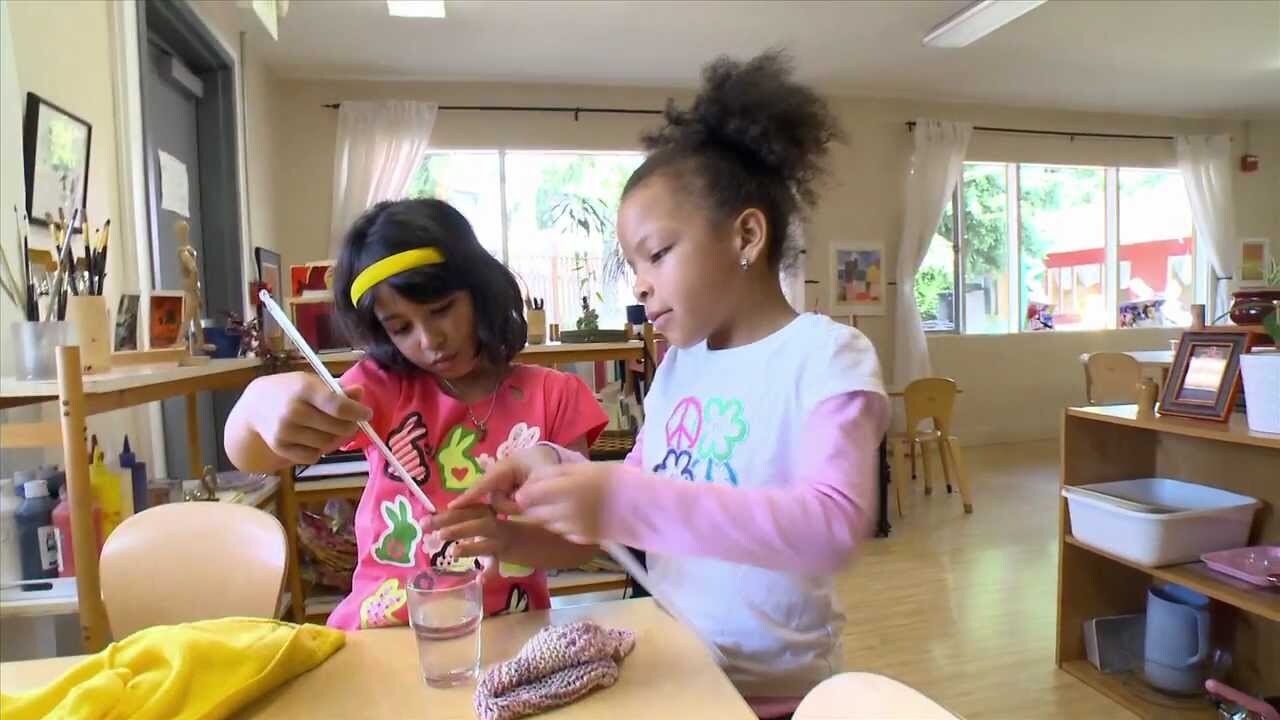
Harvard University’s Center on the Developing Child produced the video below, which discusses the importance of executive functioning skills to life and learning. Many of the classrooms featured are Montessori classrooms.
InBrief: Executive Function: Skills for Life and Learning
Assessment Methods
To measure student progress against MIR’s SLOs, teachers use a mix of formative assessment and academic achievement assessment. Formative assessment includes the teacher’s ongoing observation of and interaction with the children to assess their individual progress and support their learning across all SLOs.
MIR students in grades 3-6 participate in standardized testing to practice their conventional test-taking skills. The test results can also serve as one additional data point to help teachers and parents understand students’ strengths and challenges. MIR uses the TerraNova3 test.
MIR students as a whole consistently perform mostly above grade level on the TerraNova test. Overall results are reported in our Annual Reports. Individual student results vary for many reasons.